Get The Peace You Deserve
How Physical Therapy Helps You Recover Strength, Movement, and Confidence
Want to listen to our Blog? Click on the audio above!
Whether you’re recovering from surgery, healing after an injury, managing chronic pain, or regaining mobility after a health setback, recovery is about more than relieving pain. It’s about rebuilding strength, restoring movement, and regaining the confidence to live life without limitations.
Evidence-based physical therapy is considered the gold standard for treating many musculoskeletal conditions. According to U.S. Clinical Practice Guidelines published in the Journal of Orthopaedic & Sports Physical Therapy (JOSPT), active rehabilitation—including therapeutic exercise, movement training, and patient education—helps reduce pain, improve function, and support long-term recovery.
At Virtuous Wellness Center, our physical therapists use these evidence-based principles to create personalized treatment plans that help you recover safely, move confidently, and stay active.
Recovery Is More Than Rest
Recovery used to mean waiting for pain to disappear. Today, we know that guided movement is often the fastest path back to health.
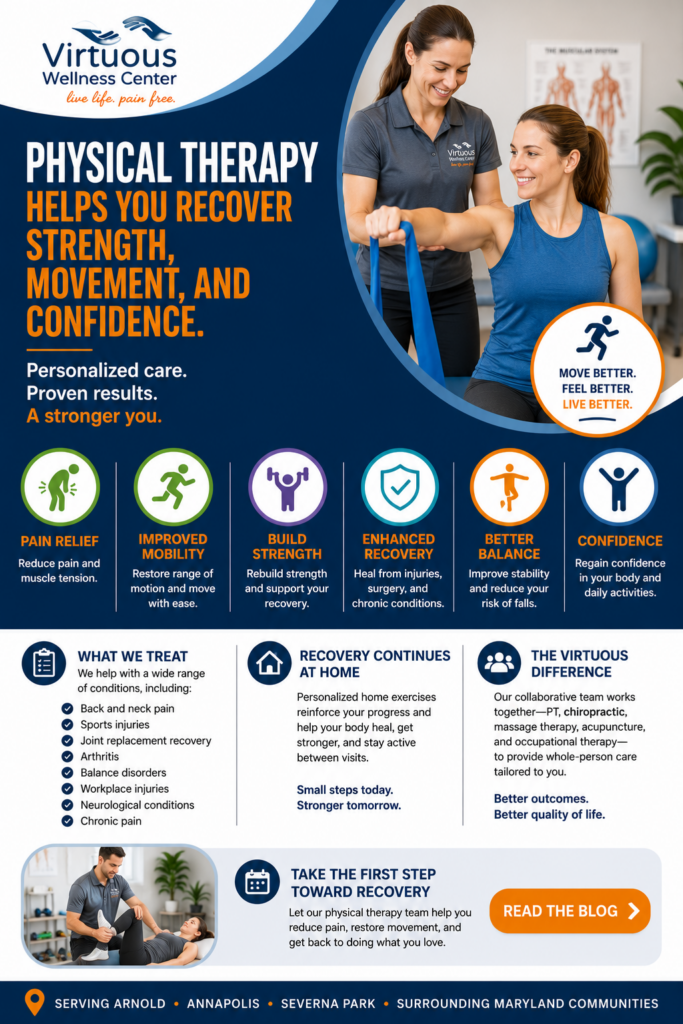
Modern physical therapy combines strengthening exercises, mobility training, balance work, and movement retraining to restore function while reducing the risk of future injury. Rather than masking symptoms, physical therapy addresses the underlying causes of pain and limited mobility.
Whether your goal is returning to work, getting back to your favorite sport, or simply walking without discomfort, your treatment plan is designed around what matters most to you.
Learn More About Our Services!
What Does Physical Therapy Treat?
Physical therapy helps restore the way your body moves by evaluating strength, flexibility, joint mobility, posture, balance, walking mechanics, and functional movement.
It is commonly recommended for:
- Back and neck pain
- Sports injuries
- Joint replacement recovery
- Arthritis
- Balance disorders
- Workplace injuries
- Neurological conditions
- Chronic pain
Every rehabilitation program is tailored to your condition, lifestyle, and recovery goals.
Building Strength and Restoring Movement
Physical therapy is far more than a list of exercises. Every movement is carefully selected to strengthen weakened muscles, improve joint stability, restore normal movement patterns, and safely increase your body’s capacity as healing progresses.
Pain often changes the way we move. You may begin limping, avoid stairs, or stop reaching overhead without realizing it. Over time, these compensations place additional stress on other joints and muscles, sometimes creating new problems.
A physical therapist identifies these altered movement patterns and helps retrain your body to move efficiently again, reducing pain while improving strength, flexibility, and mobility.
Confidence Is Part of Recovery
Recovery isn’t just physical—it affects your confidence, too.
Many people become hesitant to move after an injury because they’re afraid of making it worse. Unfortunately, avoiding movement often leads to muscle weakness, stiffness, and a slower recovery.
As your strength, balance, endurance, and mobility improve, so does your confidence. Everyday activities become easier, whether that’s climbing stairs, returning to work, exercising, or playing with your children or grandchildren.
One of the greatest successes in physical therapy is helping patients trust their bodies again.
Recovery Continues at Home
The work doesn’t stop when your appointment ends.
A personalized home exercise program reinforces the progress you make during therapy sessions and helps your body continue adapting between visits. Small, consistent improvements over time produce the greatest long-term results.
Our therapists design home programs that are practical, achievable, and easy to incorporate into your daily routine.
The Virtuous Wellness Center Difference
At Virtuous Wellness Center, we believe recovery is about caring for the whole person—not just the injury.
Our collaborative team includes physical therapists, chiropractors, massage therapists, acupuncturists, and occupational therapists who work together to provide coordinated, patient-centered care. By addressing pain, mobility, strength, and overall wellness from multiple perspectives, we help patients achieve better outcomes and return to the activities they enjoy.
Take the First Step Toward Recovery
Physical therapy can help reduce pain, improve movement, restore strength, and rebuild the confidence to enjoy everyday life again. Whether you’re recovering from surgery, managing chronic pain, or rehabilitating a sports injury, the team at Virtuous Wellness Center is here to help you move better—and live better.
Ready to Start Feeling Better?
Other Blogs & Articles:

Frequently Asked Questions
How do I know if I need physical therapy?
If pain, stiffness, weakness, balance issues, or limited mobility are affecting your daily activities, physical therapy can help restore movement and improve function.
Can physical therapy help me avoid surgery?
In many cases, yes. Evidence-based rehabilitation can successfully manage certain musculoskeletal conditions, reducing pain and improving function enough to delay or eliminate the need for surgery.
How long does physical therapy take?
Recovery varies depending on your condition and goals. Many patients notice improvement within a few visits, while more complex conditions require a longer rehabilitation plan.
Do I need a referral for physical therapy in Maryland?
Maryland offers direct access to physical therapy in many situations, although some insurance plans may require a referral. Our team can help you understand your coverage.
Learn More
Interested in the evidence behind modern physical therapy?
The Journal of Orthopaedic & Sports Physical Therapy (JOSPT) publishes evidence-based Clinical Practice Guidelines used by physical therapists throughout the United States.
Acute and Chronic Low Back Pain: Revision 2021 Clinical Practice Guidelines
https://www.jospt.org/doi/10.2519/jospt.2021.0304